Biography
Early Life
Born 25 May 1863 (6 Dhu al-Hijjah 1279 AH) in Amroha, in the North-Western Provinces of British India, to Syed Akbar Husain. He belonged to a Sayyid family and pursued traditional Islamic studies from an early age, later becoming a disciple and son-in-law of the leading Lucknow jurist Syed Muhammad Abbas.
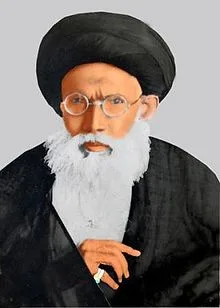
Ayatollah Syed Najmul Hasan, honoured with the titles Najmul Millat ("Star of the Community") and Najmul Ulama ("Star of the Scholars"), was one of the most influential Twelver Shia jurists and educators of British India. He was born on 25 May 1863 (6 Dhu al-Hijjah 1279 AH) in Amroha to Syed Akbar Husain, into a Sayyid family with strong scholarly traditions.
He received his early religious education in India, where he became a devoted student of the eminent Lucknow jurist Syed Muhammad Abbas, whose daughter he later married. After mastering fiqh and the principles of jurisprudence at home, he travelled to the seminary (hawza) of Najaf in Iraq, the foremost centre of Shia learning, where he completed his advanced studies and attained the rank of mujtahid.
Returning to India, Najmul Hasan devoted his life to strengthening Shia scholarship and religious education. His most enduring achievement was the founding of Jamia Nazmia (Madrasa-e-Nazmia) in Lucknow in 1890, which became and remains the oldest Shia religious seminary in the Indian subcontinent. Through this institution he sought to produce well-trained scholars, jurists and preachers to serve Shia communities across India and beyond.
Beyond Jamia Nazmia, he was a driving force behind several other major Shia institutions. He was a co-founder of Shia College, Lucknow, and of Madrasatul Waizeen, a seminary dedicated to training religious orators and missionaries, and he established the Imam-ul-Madaris College in his home town of Amroha. He was also among the founders of the All India Shia Conference, which worked for the educational and social welfare of the Shia community.
As a marja and teacher, Najmul Hasan trained a large number of prominent scholars who carried his legacy forward, among them Syed Sibte Hasan Naqvi, Farman Ali, Muhammad Haroon, Muhammad Dawood, Kifayat Hussain and Jaffer Hussain. His students went on to serve as scholars, jurists and missionaries not only across India but in regions as distant as Tibet, Burma and Africa.
He was a contemporary of leading marjas of Najaf such as Sayyid Kazim Tabatabai Yazdi, Ziauddin al-Iraqi and Abul Hasan Isfahani, and was widely respected as one of the foremost religious authorities of his generation in the subcontinent. Najmul Millat died on 18 April 1938 (17 Safar 1361 AH), leaving behind a network of institutions and a lineage of scholars that continue to shape Shia religious life in India to this day.
Education & Training
Studied fiqh and usul al-fiqh in India under Syed Muhammad Abbas (his teacher and father-in-law)
Completed advanced studies at the Hawza of Najaf, Iraq
Attained the rank of mujtahid (ijtihad) in Najaf
Positions & Achievements
Founder of Jamia Nazmia (Madrasa-e-Nazmia), Lucknow — the oldest Shia religious seminary in India (founded 1890)
Founder of Imam-ul-Madaris Inter College, Amroha
Co-founder of the All India Shia Conference
Co-founder of Shia College, Lucknow
Co-founder of Madrasatul Waizeen, Lucknow
Marja and leading Shia jurist of Lucknow
Books & Works
His foremost lasting work was the establishment in 1890 of Jamia Nazmia in Lucknow, the oldest Shia seminary in India, which trained generations of scholars and missionaries. He also authored several religious works and was instrumental in founding other Shia educational institutions in India, including Shia College and Madrasatul Waizeen in Lucknow and Imam-ul-Madaris College in Amroha.