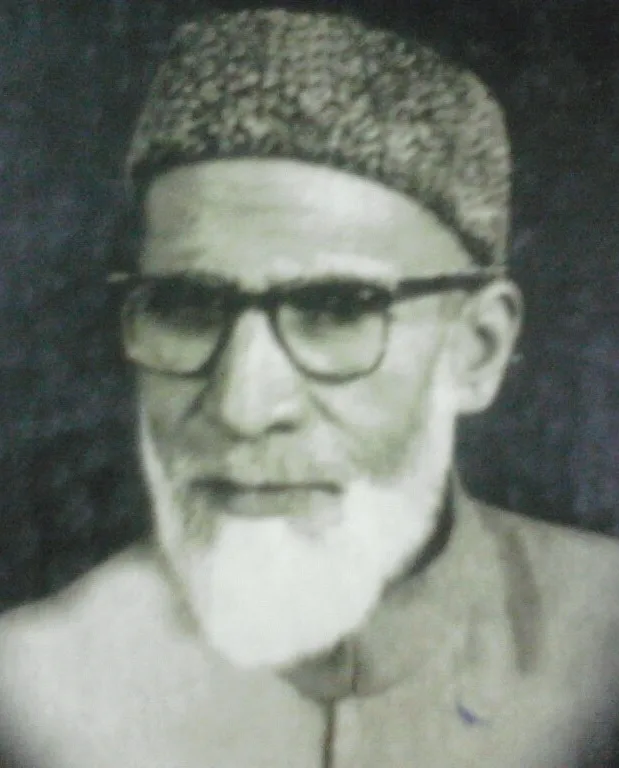
Biography
Early Life
Born on 30 September 1887 (12th Muharram 1305 AH) in British India. He was known by the honorific Khwaja and belonged to the Twelver (Ithna Ashari) Shia tradition. After the Partition of India in 1947 he migrated to the newly formed Pakistan and settled in the city of Wazirabad.
Hujjat al-Islam Khwaja Muhammad Latif Ansari (1887-1979) was a Twelver Shia scholar, author, historian and poet who was active first in British India and later in Pakistan and East Africa. He was born on 30 September 1887, corresponding to the 12th of Muharram 1305 AH, in British India, and adhered to the Ja'fari (Twelver Ithna Ashari) school.
Ansari became a prominent figure in the organised Shia religious and community life of the Indian subcontinent. During the 1940s, under British rule, he served as Secretary-General of the Punjab Shia Conference. Following the Partition of India in 1947 he migrated to the newly created state of Pakistan and settled in the city of Wazirabad, where he continued his scholarly and community work. He went on to serve as the first Secretary-General of the All-Pakistan Shia Conference.
In the 1950s he left South Asia for Kenya, where he lived and worked as a resident scholar serving the local Shia community, particularly among the Khoja community of East Africa. He is remembered there to this day for his role in establishing an active and organised Shia religious presence in the country, and for his teaching and guidance of the community.
Ansari was a prolific writer whose output centred on Islamic and Shia history, the lives of the Imams from the Ahl al-Bayt, and the events of Karbala. Among his better-known works are Islam Aur Musalmano Ki Tareekh (a history of Islam and the Muslims), Tarikh-i Hasan Mujtaba (a history of Imam al-Hasan al-Mujtaba), Karbala ki Kahani Quran ki Zabani, Shazada-e-Yathrib Alam-e-Hijrat Mein, and Ma'arij al-Irfan. A number of his books are reported to have remained unpublished during his lifetime.
He spent the last decade of his life partially paralysed due to illness. He died in 1979 at the age of 92, leaving behind a substantial body of Urdu religious and historical literature and a lasting reputation among the Shia communities of Pakistan and East Africa.
Positions & Achievements
Secretary-General of the Punjab Shia Conference (PuSC), 1940s (British India)
First Secretary-General of the All-Pakistan Shia Conference (APSC) after 1947
Resident alim (Islamic scholar) serving the Shia community in Kenya from the 1950s
Professor and scholar
Books & Works
A prolific Urdu author, historian and poet whose works focus on Islamic and Shia history, the life of the Ahl al-Bayt and the tragedy of Karbala. Notable titles include Islam Aur Musalmano Ki Tareekh, Tarikh-i Hasan Mujtaba and Karbala ki Kahani, Quran ki Zabani. Many of his writings reportedly remained unpublished.
📖
Islam Aur Musalmano Ki Tareekh (The History of Islam and Muslims)
📖
Tarikh-i Hasan Mujtaba (History of al-Hasan al-Mujtaba)
📖
Karbala ki Kahani, Quran ki Zabani (The Story of Karbala in the Words of the Qur'an)
📖
Shazada-e-Yathrib Alam-e-Hijrat Mein
📖
Ma'arij al-Irfan